


Proudly Serving The Tampa Area




4.9

Trusted by 1949+ Customers
Tankless Water Heaters & Tampa Summers: Managing 80°F Ground Water Swings
Delivering Comfort, Health, and Peace of Mind To Your Home
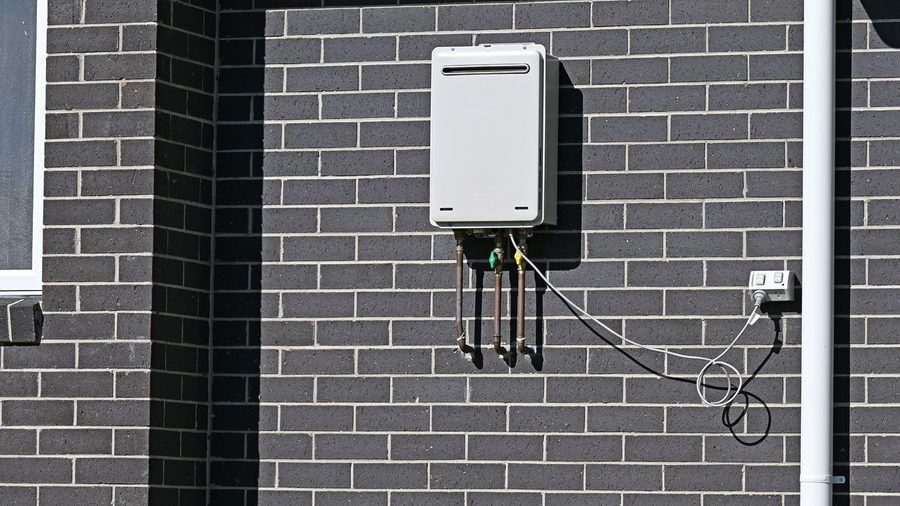
Living along Tampa Bay, from South Tampa and Carrollwood to Brandon, St. Petersburg, and Clearwater, means experiencing hot, humid weather for most of the year. During peak summer months, ambient temperatures soar into the 90s, driving subterranean soil temperatures up alongside them.
While homeowners across Northern states struggle with freezing groundwater in winter, Tampa homeowners face the exact opposite phenomenon: incoming tap water that reaches a sweltering 80°F to 85°F during summer. When upgrading to a high-efficiency tankless water heater, managing these high incoming groundwater temperatures requires a unique sizing strategy. If your tankless unit isn’t calibrated properly for Tampa’s summer water profile, you can end up with scalding tap temperatures, system overheating shutdowns, or erratic hot water delivery.
This guide breaks down how 80°F groundwater affects tankless performance, how temperature rise works in warm climates, and how to optimize your system for year-round comfort.
The Science of Groundwater Temperature Swings in Tampa
Groundwater temperatures closely track regional climate averages. In the Tampa Bay area, incoming municipal and private well water temperatures shift noticeably between seasons:
-
Winter Baseline: During January and February, incoming cold water enters Tampa homes at a mild 65°F to 70°F.
-
Summer Baseline: From June through September, intense solar heating warms shallow subterranean service pipes, raising incoming tap water to 80°F to 85°F.
This high summer baseline dramatically alters how your tankless system operates.
Understanding “Delta T” and the High Groundwater Challenge
Tankless water heaters heat water instantly on demand. How a system performs depends on Delta T, the required temperature rise calculated by subtracting incoming groundwater temperature from your desired hot water setpoint (typically 120°F).
The Low Delta T Advantage: Maximum Flow Rates
To heat 82°F summer groundwater to a comfortable 120°F, your tankless unit only needs to provide a tiny 38°F temperature rise.
Because the required heating workload is minimal, gas and electric tankless units reach maximum Gallons Per Minute (GPM) output easily during summer. A single unit can supply high flow rates to multiple showers, the washing machine, and the kitchen sink simultaneously without losing hot water pressure.
The Overheating Hazard: Burner Turndown Ratios
While high GPM sounds like a pure benefit, 82°F groundwater introduces a mechanical challenge: system overheating and temperature overshoot.
When you turn on a single bathroom faucet at a low flow rate (such as 0.5 to 1.0 GPM), a high-capacity gas burner must throttle its heating output down to a very low flame. If a tankless unit lacks a wide turndown ratio (the ratio between maximum and minimum BTU output), even its lowest burner setting generates too much heat for an 82°F baseline.
This causes the water inside the heat exchanger to quickly overshoot your 120°F target, triggering the unit’s internal safety limit switch to shut the burner off entirely. The result? A sudden, frustrating plunge into cold water mid-shower, often called a “cold water sandwich.”
4 Keys to Optimizing a Tankless Water Heater for Tampa Homes
To handle 80°F+ summer groundwater while maintaining consistent, safe hot water year-round, your tankless installation should include these design choices:
1. High Turndown Ratio Gas Burners
Select a modern condensing gas tankless unit with a wide turndown ratio (such as 15:1 or 20:1). A 20:1 turndown ratio allows a 199,000 BTU burner to turn its output down to just 9,950 BTUs, preventing water overheating during low-flow summer use.
2. Precision Electronic Mixing Valves
High-end tankless models include an internal or external automatic bypass mixing valve. If incoming groundwater is exceptionally warm or the burner output runs slightly hot, the valve injects a precise stream of unheated tap water into the outgoing line, stabilizing the supply at 120°F.
3. Gas Line Load Calibration and Sizing
Gas tankless units require proper fuel volume to maintain stable flame modulation. Ensuring your home’s gas supply line (natural gas or propane) is sized correctly prevents fuel starvation and burner stutter when switching between low summer draws and high demand.
4. Annual Descaling for Hard Water Scaling
While Tampa tap water isn’t as hard as desert groundwater, local supplies still contain dissolved minerals. High summer temperatures inside the heat exchanger accelerate scale formation on copper and stainless steel walls. Scheduling an annual descaling flush removes mineral film, keeping thermal sensors accurate and preventing overheating errors.
Summer vs. Winter Tankless Performance in Tampa
Summer Operation (Warm Groundwater ~82°F):
-
Required Temperature Rise: Low ($\approx 38^\circ\text{F}$)
-
Available Flow Rate: Maximum Capacity ($8.5 – 10.0+\text{ GPM}$)
-
Primary Mechanical Risk: Burner Overheating & Temperature Overshoot
-
Burner Strain: Ultra-Low Thermal Output
Winter Operation (Mild Groundwater ~65°F):
-
Required Temperature Rise: Moderate ($\approx 55^\circ\text{F}$)
-
Available Flow Rate: High Capacity ($6.5 – 8.0\text{ GPM}$)
-
Primary Mechanical Risk: None (Ideal Operating Range)
-
Burner Strain: Balanced Output
Enjoy Reliable Hot Water Through Every Season
Upgrading to a tankless water heater delivers endless hot water, space savings, and low utility bills, provided your equipment is properly matched to Tampa’s unique subtropical water profile.
Taking a science-based approach to equipment selection, turndown ratios, and flow controls ensures your family enjoys safe, comfortable, and consistent hot water through the hottest summer heatwaves and mildest winter stretches.
Upgrade your home’s hot water performance today. Contact The Comfort Authority to schedule your water heater service today!
Get Started Today
Reach Out to Schedule Service
Contact The Comfort Authority today. From heating and cooling to plumbing repairs, sewer services, and drain solutions, our team delivers quick, professional service you can count on. Schedule your appointment now and experience prompt, reliable care for your entire home. Don’t wait, make sure your comfort systems are in the best hands.